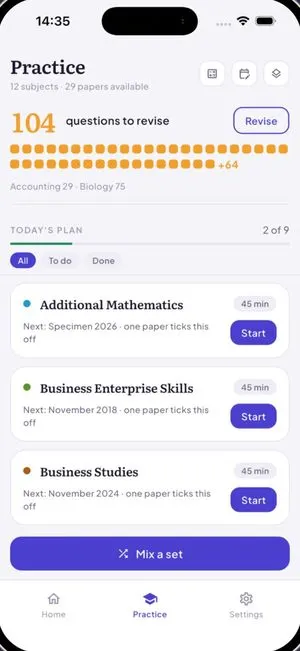
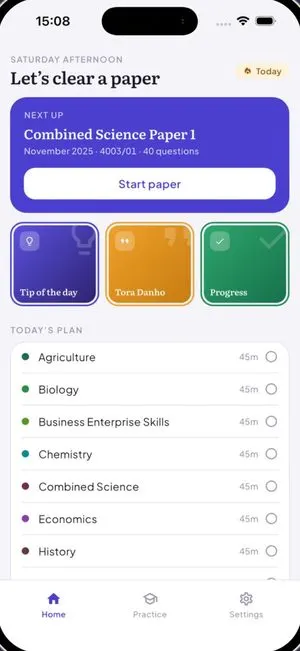
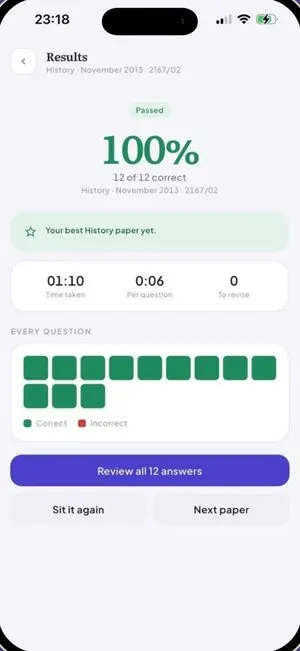
Danho turns O Level and A Level past papers into a revision plan. Sit a paper, see exactly what to revise, and watch the pile shrink until it is empty.
Works fully offline once a subject is downloaded
Progress tracked paper by paper, not just a percentage
Real exam sittings, sorted by year and syllabus code
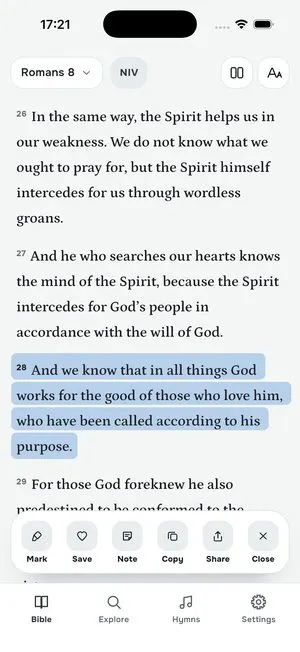
The Shona Bible. Every hymn your church sings. Free.
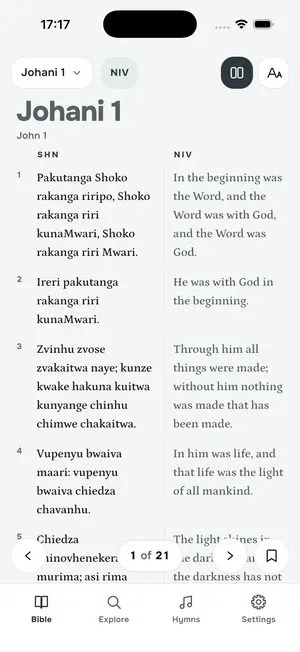
Every book of the Bible in Shona with King James English beside any verse, and the full words to every hymn in the hymnals Zimbabwean churches sing from.
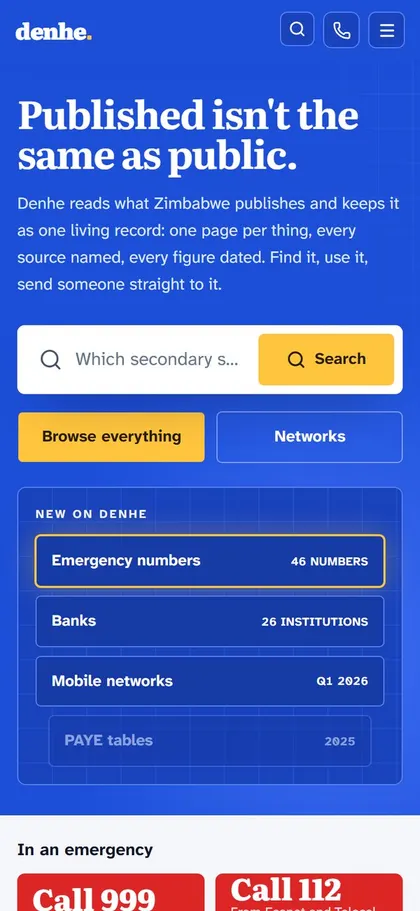
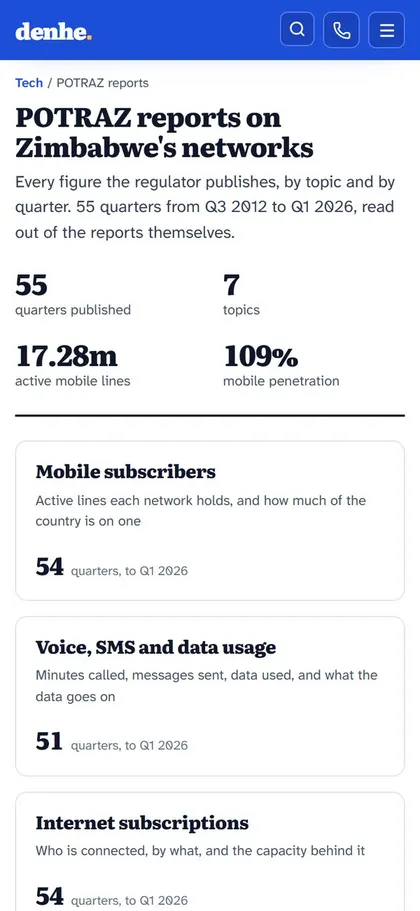
Zimbabwe's laws, school results, budgets, bank codes, network data and public registers, kept as one record. One page per thing, every source named and dated.
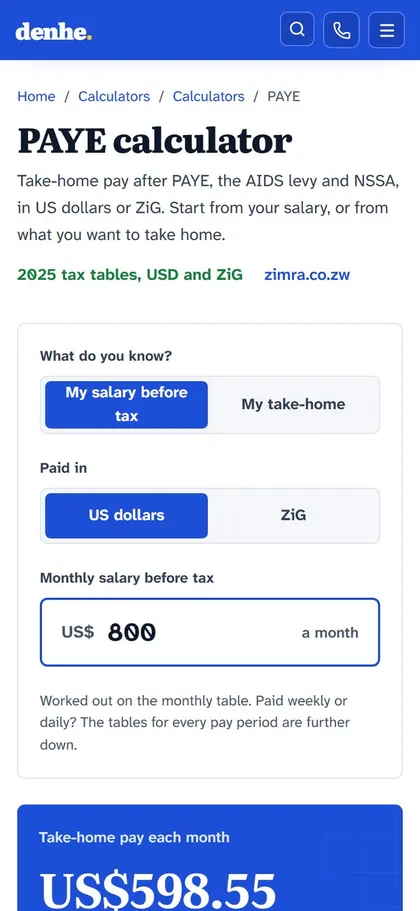
Take-home pay, ZESA units and mobile money charges worked out
 Provisional Test ZimbabweZimbabwe VID test and Highway Code